JavaScript Frameworks: Introduction
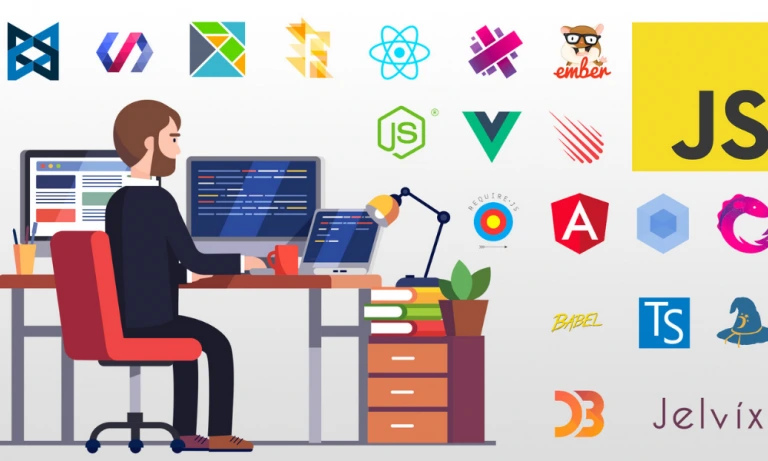
JavaScript frameworks have become essential tools for modern web development. These frameworks provide predefined structures and libraries that simplify the creation of complex and dynamic web applications.
What is a JavaScript framework?
A JavaScript framework is a pre-written code structure that provides a foundation on which developers can build web applications. These frameworks offer common functionalities, design patterns, and tools that speed up the development process.
Main JavaScript frameworks
- React: Developed by Facebook, React is a library for building user interfaces. It is known for its focus on reusable components and its efficient handling of the virtual DOM.
- Angular: Maintained by Google, Angular is a full framework for creating single-page web applications (SPA). It offers a robust set of tools and features.
- Vue.js: Known for its gentle learning curve, Vue.js combines the best of React and Angular, offering a progressive and flexible framework.
- Svelte: A newer framework that compiles your code during build time, resulting in lighter and faster applications.
Advantages of using JavaScript frameworks
- Efficiency in development: They provide predefined structures and components.
- Better code organization: They promote clean and modular coding practices.
- Community and support: Most have large communities and abundant documentation.
- Optimized performance: They offer advanced techniques to improve application performance.
How to choose the right framework
The choice of framework depends on several factors:
- Project complexity: Some frameworks are better for small projects, others for enterprise applications.
- Learning curve: Consider the time you have to learn a new technology.
- Performance: Evaluate the performance needs of your application.
- Ecosystem and community: A robust ecosystem can provide more resources and solutions.
Conclusion
JavaScript frameworks have revolutionized front-end web development, allowing developers to create faster, more efficient, and scalable web applications. Whether you choose React, Angular, Vue.js, or any other framework, the important thing is to understand their strengths and how they can benefit your specific project.
Remember, there is no universal ‘best’ framework; the right choice depends on your needs, experience, and project goals. Explore, experiment, and find the one that best suits your development style!